The Challenge
Diverse buildings, shared infrastructure, and plans that go stale.
Universities and schools have some of the most varied building portfolios anywhere: historic halls next to research labs, residence halls, athletics facilities, and dining commons, many of them decades old and some never upgraded to modern performance standards. Many are connected to a central plant, so a decision about one building changes the load on shared heating and cooling infrastructure. Campus climate commitments, city audit and performance requirements, and deferred maintenance all compete for the same capital.
Campus planning has traditionally relied on two kinds of evidence. Detailed energy audits give building-specific recommendations but take months and cover only a handful of buildings. Top-down benchmarking covers the whole campus but can't say which measure to fund in which building. Either way, the result is usually a static report, finished just as funding, enrollment, construction plans, and equipment condition begin to change.

The Solution
A living planning tool.
Carbon Signal builds a calibrated energy model for every building on campus, using physics-based simulation combined with machine learning. Models start from the utility data the campus already collects, whether from building meters or central plant steam, chilled water, and electricity, and carry a stated level of confidence. Each model is an ensemble, so the savings from any measure come as a range rather than a single number, and projects can be ranked by both their expected impact and the certainty behind it.
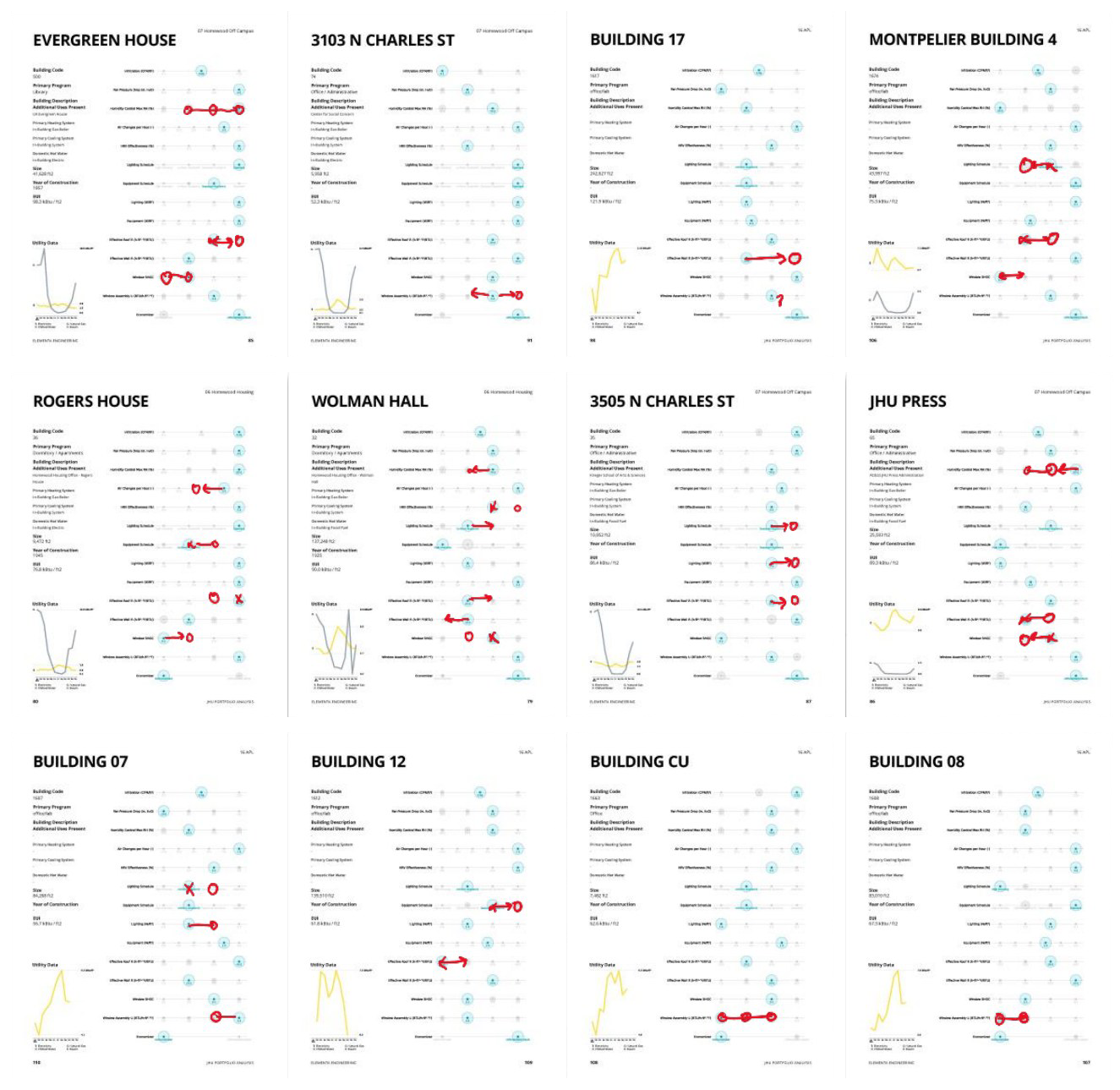
The models are refined where it matters. Facilities teams mark up model inputs from what they know about each building, and targeted site visits narrow the uncertainty in the buildings where decisions are closest. Building results roll up to the campus and to the central plant, so the same models can answer which buildings to renovate, which measures to fund this year, and how big the plant needs to be after electrification.
The Impacts
Ranking projects by impact and confidence.
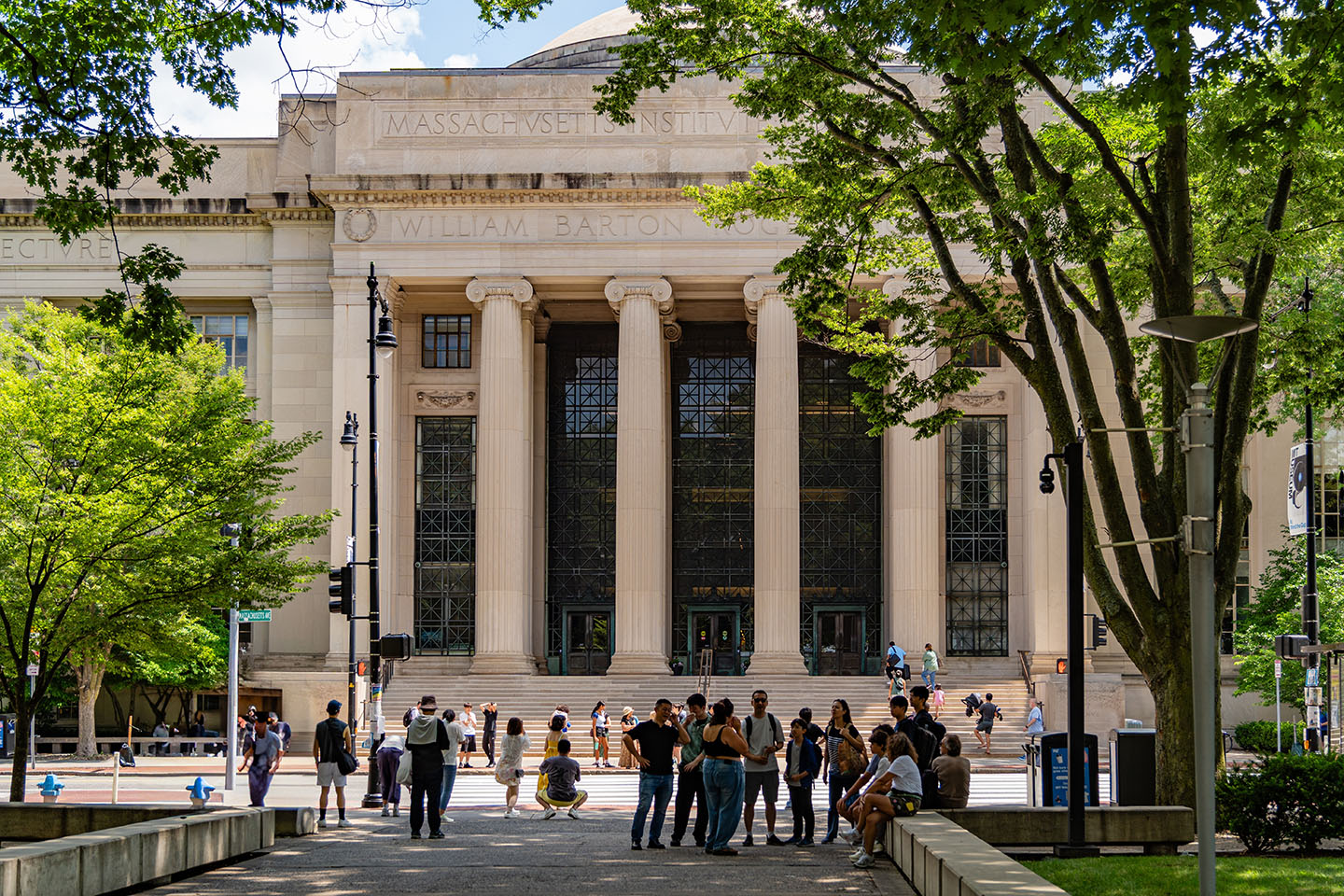
At MIT, Carbon Signal's ensemble models covered about 200 campus buildings and ranked the top 25 projects by their median expected emissions savings, with the full range of outcomes shown for each. Refining the models with the facilities team uncovered misconfigured controls whose correction saved about 5,000 tCO₂e a year. At Johns Hopkins University, the same approach became a continuous planning tool: facilities staff reviewed and corrected each building's model inputs, and the university explored technical pathways and the ability to meet carbon commitment as conditions change.
Deciding between renovation and retrofit.
For Georgia Tech's first comprehensive campus plan in nearly twenty years, Carbon Signal assessed the energy and emissions reduction potential of 140 buildings totaling 11.7 million square feet, intervention by intervention. Comparing those results with the institute's facility condition assessments showed which buildings were best served by a whole-building renovation, where both the need for renewal and the savings potential are high, and which by targeted energy retrofits, where the building is in good condition but the savings are still large.
Meeting audit requirements in half the time.
The University of San Francisco needed energy audits of 20 buildings to comply with the city's auditing requirements, and was already past its deadline. Carbon Signal modeled all 20 buildings, and on-site inspections were focused on 6 priority buildings, whose findings were used to refine the models for the rest. The City of San Francisco approved this hybrid approach for compliance. Work that would previously have taken 10 months was completed in 5, with about 72% lower cost per building, about 56% fewer labor hours, and about 71% less time on site.
Sizing the central plant as the campus changes.
For San José State University's district energy master plan, as the campus moves away from an aging cogeneration plant toward an 80% emissions reduction by 2040, Carbon Signal's calibrated models generated baseline load profiles for each building and evaluated energy reduction measures. Two interactive dashboards replaced a static report: one ranks measures by building, and the other carries those results into the central plant, testing new construction, renovation, electrification, and efficiency scenarios against heating, cooling, and electrical capacity. The university can rerun the plan as funding and priorities shift.

Planning for schools as well as universities.
At the Lawrenceville School in New Jersey, Carbon Signal modeled 133 campus buildings from minimal utility data to chart a path to the school's targets of halving emissions by 2035 and reaching carbon neutrality by 2045. The plan weighed the existing solar field, building efficiency, electrification, and additional renewables and storage, and informed the school's decisions on how to count the solar array's power purchase agreement. Students joined the work, surveying 16 buildings to gather building data.
About the Institutions
Massachusetts Institute of Technology, Johns Hopkins University, Georgia Institute of Technology, the University of San Francisco, San José State University, and the Lawrenceville School use calibrated campus models from Carbon Signal to prioritize projects, meet audit and compliance requirements, and plan infrastructure as their campuses change.